
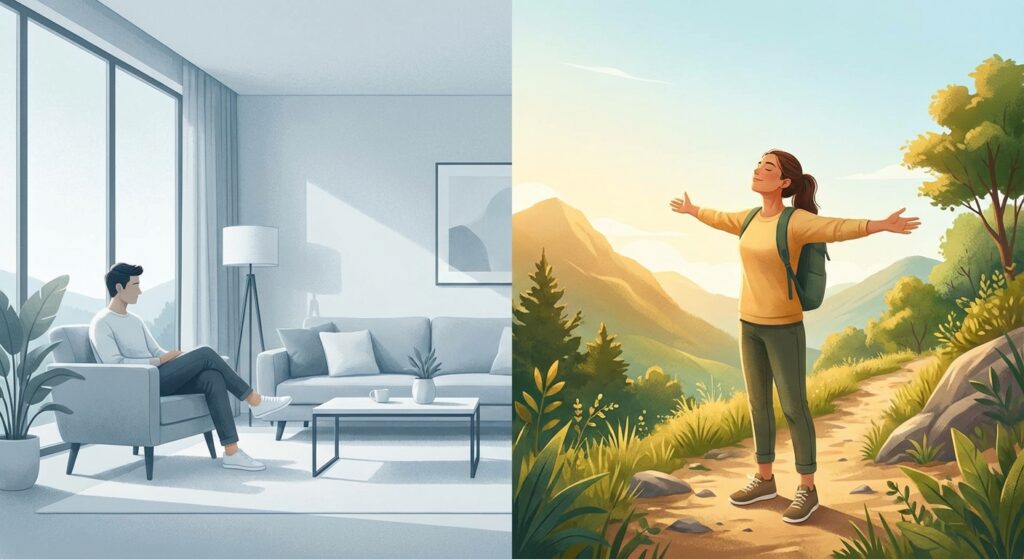
Hey wonderful souls! Have you noticed how much time you’re spending indoors lately? Between work, entertainment, and the comfort of climate control, our homes have become beautiful prisons that we rarely leave. But what if I told you that this indoor lifestyle is silently affecting your mental health, creativity, and overall happiness? Let’s explore the hidden costs of our indoor-centric lives and discover why stepping outside might be the most important thing you do today.
The Allure of Indoor Comfort: A Double-Edged Sword
Our homes have evolved into self-contained ecosystems of convenience. We’ve created spaces that shield us from every discomfort—air conditioning protects us from heat, heating systems ward off the cold, and entertainment systems keep boredom at bay. With streaming services, social media, home gyms, and food delivery apps, we can literally spend days without stepping outside our front door.
This modern marvel of indoor living offers undeniable benefits. We feel safe within our familiar walls. We control our environment completely. We can work, exercise, socialize, and relax all within the same four walls. The predictability and security of indoor spaces provide a cocoon of comfort that feels increasingly difficult to leave.
Reality Check: The average person now spends approximately 90% of their time indoors, a dramatic shift from how humans lived for thousands of years. This disconnection from nature isn’t just changing our habits—it’s changing our biology and psychology.
The Hidden Costs: What We’re Really Losing
While we’re enjoying our climate-controlled comfort, something profound is happening. We’re losing our connection to the natural world, and that loss carries serious consequences for our mental and physical well-being.
Mental Health Takes a Hit
Research consistently shows that prolonged indoor living correlates with increased rates of anxiety, depression, and stress. Nature exposure, on the other hand, has been proven to reduce cortisol levels, lower blood pressure, and improve overall mood. When we stay inside too much, we’re essentially depriving ourselves of a free, natural antidepressant that’s been available to humanity since the beginning of time.
Creativity and Focus Suffer
Studies reveal that time in nature enhances creative problem-solving abilities by as much as 50%. The natural world provides a type of attention restoration that our overstimulated, screen-saturated brains desperately need. Indoor environments, especially those dominated by artificial light and digital screens, create mental fatigue that we often don’t even recognize until we finally step outside.
Physical Health Declines
Beyond mental wellness, staying indoors affects our physical health. Vitamin D deficiency has become epidemic, affecting immune function, bone health, and even mood regulation. Our circadian rhythms become disrupted without natural light exposure, leading to sleep problems and metabolic issues. The sedentary nature of indoor living contributes to numerous health problems that outdoor activity naturally prevents.
Breaking Free: Practical Ways to Reconnect with Nature
The good news? Reconnecting with the outdoors doesn’t require dramatic lifestyle changes. Small, consistent steps can make a tremendous difference in how you feel.
1. Start with Morning Sunlight
Spend just 10-15 minutes outside within an hour of waking up. This simple practice regulates your circadian rhythm, boosts your mood, and sets a positive tone for the entire day. Have your morning coffee on the porch or take a brief walk around the block before starting your day.
2. Transform Your Exercise Routine
Instead of always hitting the home gym or indoor fitness center, take your workout outside. Go for a jog in the park, practice yoga on your lawn, or simply take a brisk walk through your neighborhood. The combination of physical activity and nature exposure multiplies the mental health benefits exponentially.
3. Schedule Screen-Free Outdoor Time
Here’s a tough question: Are you living your life or just consuming content about other people living theirs? Those influencers you follow are out exploring, creating, and experiencing. What about you? Set specific times each day when you put down the phone and step outside. Make it non-negotiable “you time” in nature.
4. Embrace Evening Outdoor Rituals
You don’t need to go out during the harsh midday sun. Once the sun sets and temperatures cool down, the outdoors becomes magical. Evening walks, stargazing, or simply sitting outside and listening to night sounds can be incredibly restorative. This is when nature offers a different kind of peace—quiet, gentle, and deeply calming.
5. Bring Nature to Your Indoor Spaces
While spending time outdoors is essential, you can also blur the boundaries between inside and outside. Open your windows to let fresh air circulate. Add plants to your living spaces. Create a small garden on your balcony. These small changes remind you that you’re part of the natural world, even when you must be inside.
The Science of Nature Connection
The benefits of outdoor time aren’t just anecdotal—they’re backed by solid science. The Japanese practice of “forest bathing” (shinrin-yoku) has been extensively studied, showing measurable improvements in immune function, reduced inflammation, and lower stress hormones after just 20 minutes in nature.
Environmental psychologists have identified that natural environments provide “soft fascination”—a gentle, effortless type of attention that allows our directed attention mechanisms to rest and restore. This is the opposite of what our screens provide, which demand constant, exhausting focus.
Fascinating Fact: Exposure to natural environments has been shown to improve memory performance and attention span by as much as 20%. Nature isn’t just pleasant—it’s cognitively restorative in ways that indoor environments simply cannot replicate.
Overcoming the Indoor Inertia
Knowing that going outside is beneficial is one thing; actually doing it is another. Here’s the truth: the hardest part is simply starting. Once you’re outside, you’ll wonder why you waited so long. The resistance you feel isn’t really about the outdoors—it’s about breaking the comfortable habit of staying in.
Start small. Don’t aim for hour-long hikes if you’re currently spending all day inside. Just step out for five minutes. Feel the air on your skin. Notice the sky. Listen to the sounds around you. Build from there. Consistency matters more than duration when you’re rebuilding your relationship with nature.
Your Challenge This Week
Commit to spending at least 20 minutes outside every day for the next seven days. No screens, no distractions—just you and nature. Notice how you feel. Track your mood, energy levels, and sleep quality. Let the experience speak for itself. Your mind and body will thank you in ways you might not even expect.
The comfort of indoor living is wonderful, but it was never meant to completely replace our connection to the natural world. We are, at our core, creatures of nature. Our bodies and minds evolved outdoors, under open skies, with earth beneath our feet. That ancestral connection doesn’t disappear just because we’ve built comfortable homes.
Balance is the key. Enjoy your air conditioning, appreciate your comfortable couch, and by all means, use technology wisely. But don’t let these conveniences become barriers to the outdoor experiences that fundamentally nourish your well-being. The world outside your door is waiting—full of fresh air, natural beauty, and the kind of peace that no indoor space can fully provide.